A Guide to Modern Mexican Food in Tampa: What to Order and Why Fresh Masa Matters
By the Con Amor kitchen · Published · Updated
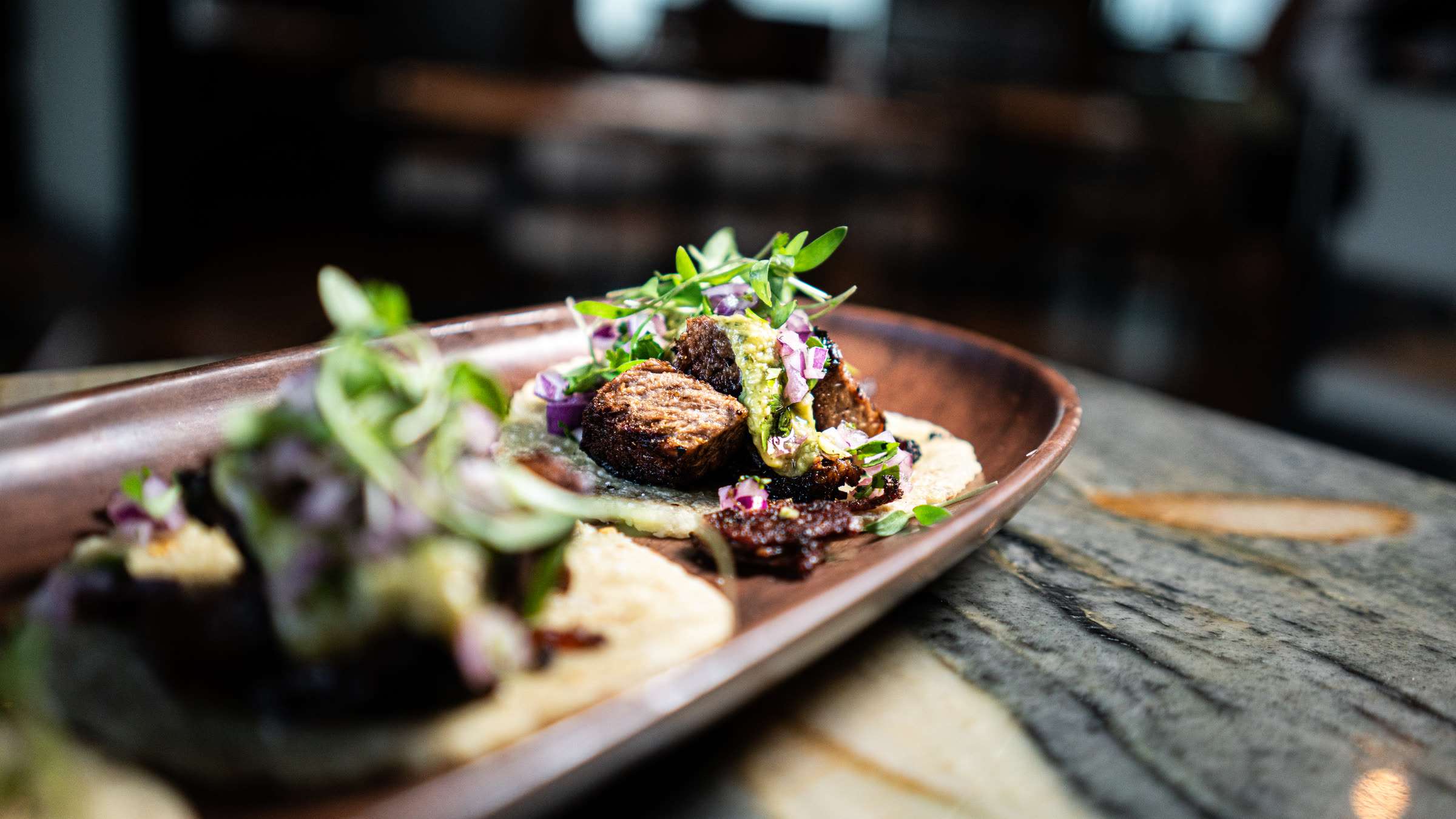
Mexican food in Tampa covers a lot of ground, from taquerías to full-service dining rooms. If you're new to modern Mexican cooking, the menus can read like a vocabulary test: mole, aguachile, molote, tetela, birria. This guide explains what those dishes are, using our own menu at Con Amor on N Florida Ave as the example, and shows how to tell when a tortilla was made from fresh masa.
What "modern Mexican" means
Modern Mexican cooking keeps the regional techniques and ingredients of Mexico, like masa, dried chiles, moles, agave spirits, and cooks them with today's methods and local produce. On our menu that looks like a Puebla-style mole next to a torta tonkatsu, steak tartare served on masa tartlets, and an aguachile that changes with what's in season in Florida. The common thread is respect for the base ingredient. For us, that's corn.
Start with the tortilla
A corn tortilla is only as good as its masa. Many kitchens buy tortillas or make them from masa harina, a dried flour. Fewer nixtamalize their own corn. A tortilla pressed from fresh masa tends to give itself away:
- It smells like toasted corn the moment it comes off the comal.
- It bends and tears rather than cracking at the fold.
- It looks handmade: slight variations in size and thickness, a few toasted spots, sometimes a puff of steam.
- The color can vary with the corn. Blue corn masa cooks up purple-gray.
- The menu says so. Look for "house-made", "nixtamal" or "fresh masa". Ask your server if you're not sure.
If you want the science behind it, we wrote a plain guide to nixtamalization.
Dishes worth knowing
Mole
Mole is a family of rich sauces built from dried chiles, spices, seeds and nuts, ground and simmered for hours. Mole poblano, from Puebla, is the best known. Our Chicken Mole is a braised chicken thigh in mole de Puebla with Mexican rice, pickled onion and sour cream, with tortillas for the sauce. Our enchiladas come with a choice of mole de Puebla or pipián rojo, a sauce thickened with pumpkin seeds.
Aguachile
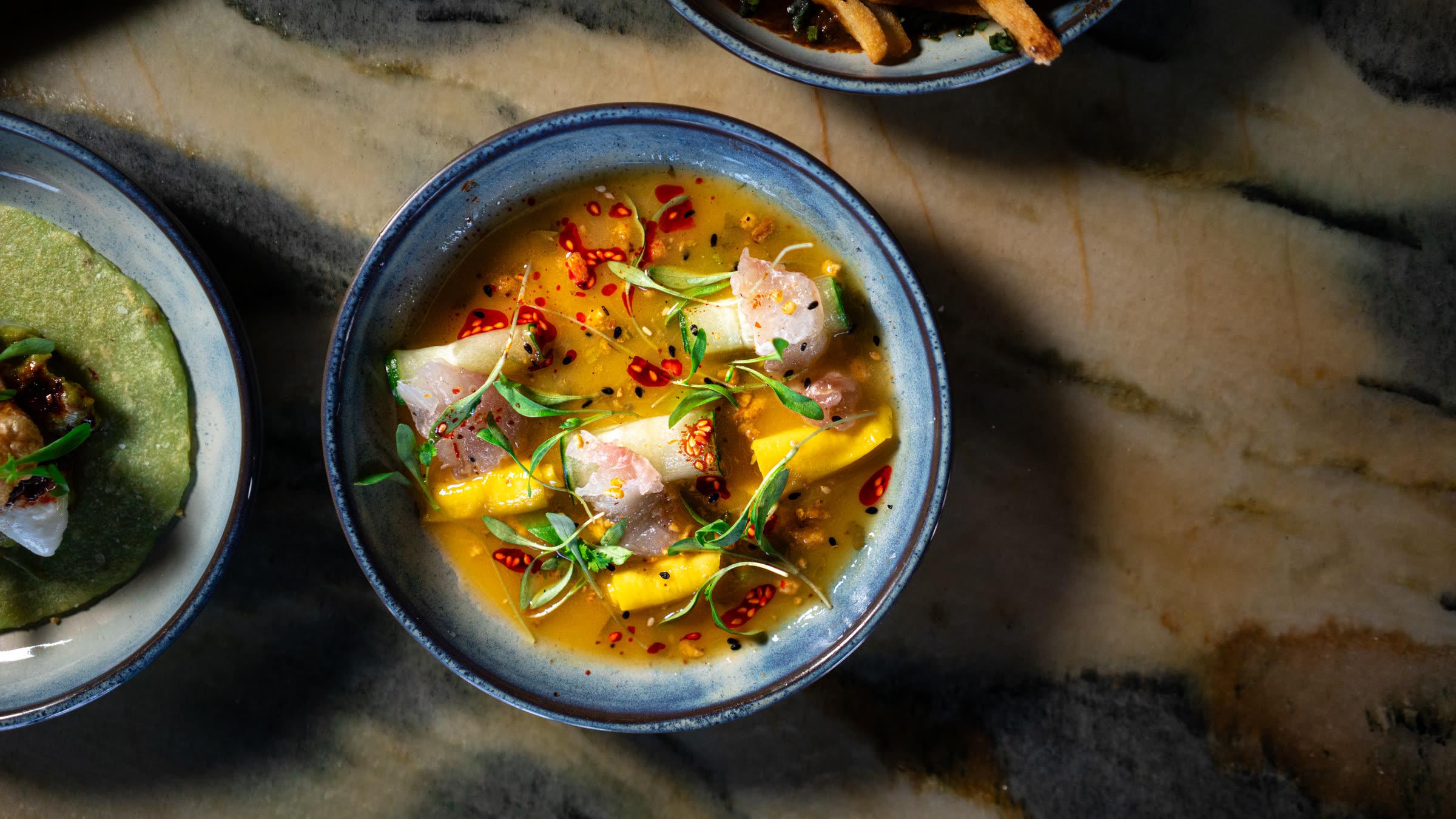
Aguachile, "chile water", comes from Sinaloa on Mexico's Pacific coast: raw seafood bathed in lime and chile, served cold and bright. Ours uses the fish of the day with passion fruit, apple, avocado, fried plantain and hibiscus. At happy hour there's a mango aguachile with mango habanero and cucumber. Both are served raw.
Molote
Molotes are torpedo-shaped masa fritters, crisp outside and soft inside, common in Oaxaca and Puebla. Our Molote Oaxaqueño on the happy hour menu wraps picadillo and pork in fried masa with shredded potato, then adds grilled corn, oaxacan cheese, sour cream, salsa borracha and a pineapple vinaigrette.
Tetela
A tetela is a triangle of masa folded around a filling and cooked on the comal, a specialty of Oaxaca and Puebla. Ours is filled with huitlacoche, a corn fungus prized for its deep, earthy flavor, plus oaxacan cheese, black bean purée and corn chowder.
Gnocchi colorado
Gnocchi are small Italian dumplings. Ours are made with masa and served colorado style, with salsa colorado, a red chile sauce, plus braised pork, huitlacoche and queso fresco.
Birria
Birria is slow-braised meat from Jalisco, served with its rich cooking broth, the consomé, for dipping. Our Birria tacos are slow-braised beef and oaxacan cheese on corn tortillas with consomé on the side.
Three things you'll see all over the menu
A few ingredients turn up again and again on modern Mexican menus. Knowing them makes the whole menu easier to read.
Salsa macha
Salsa macha is a chile oil from Veracruz: dried chiles fried in oil with garlic, often with seeds or nuts, then crushed into a crunchy, smoky, spoonable salsa. It isn't fiery so much as deep. We use it on the Mexican Caesar, the taquitos and the burrata taco, and in a honey macha on the brussels sprouts that come with the steak.
Oaxacan cheese
Oaxacan cheese, also called quesillo, is a mild, stretchy cheese wound into a ball like yarn. It melts into long strings, which is why it fills so many quesadillas and tacos. On our menu it's in the chicken tacos, the birria, the tetela, the shrimp vampiro and the blue masa quesadillas.
Deshebrada
Deshebrada means shredded, and it usually refers to beef braised until it pulls apart into strands. It's one of the add-ons you can put on our nachos, Mexican Caesar, enchiladas and quesadillas, and it fills the hash bowl at brunch.
Drinks: beyond the margarita
Tequila is made from blue agave, mostly in Jalisco. Mezcal can be made from many kinds of agave, and the hearts are often roasted, which gives many mezcals a smoky edge. A good agave list uses both. Ours includes the Mezcamaica, mezcal with hibiscus (jamaica in Spanish), orange, lime and a tajín rim, and the Paloma Rosa with tequila, mezcal, grapefruit and guava. The wine list leans Mexican, with bottles from Baja California and a sparkling wine from Querétaro, and there are mocktails for anyone skipping the alcohol.
How to order for a table
- Start with chips and salsa or guac. Our chips are corn, and the salsas change the conversation.
- Share two or three entradas, like the masa hush puppies, the aguachile and the shrimp vampiro on grilled masa.
- Tacos come three to an order, so one order per person goes a long way. Mix fillings across the table.
- Add one main for every two people if you're hungry: the mole and the gnocchi colorado are the masa-forward picks.
- Finish with the taco dulce: ice cream in a waffle cone taco shell. Ask about the flavor of the day.
The full menu has prices, and happy hour is the easiest way to try several of these dishes for about $5 each.
Questions
- What is the difference between masa and a flour tortilla?
- A corn tortilla is pressed from masa, dough made from nixtamalized corn. A flour tortilla is made from wheat flour, fat and water. They taste and behave differently, and only the corn one contains no wheat.
- What is huitlacoche?
- Huitlacoche is a fungus that grows on corn ears, prized in Mexican cooking for its earthy, savory flavor. At Con Amor it fills the tetela.
- Where can I eat food made with fresh masa in Tampa?
- Con Amor at 5240 N Florida Ave nixtamalizes and stone-grinds its own corn every day, and every taco is served on a corn tortilla pressed from that masa.